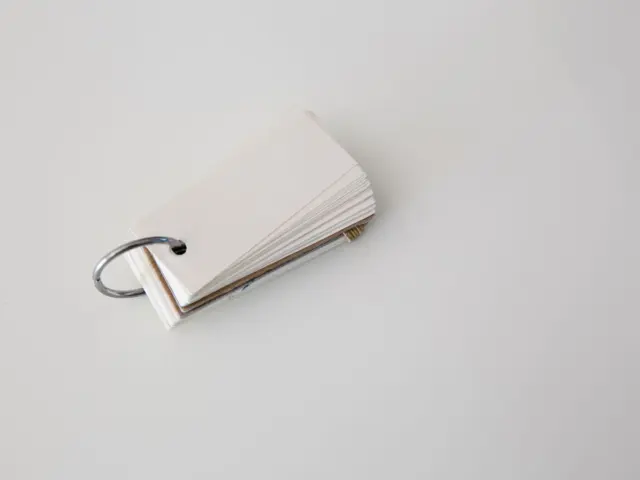

Cramming the night before rarely sticks, and you probably know it. If you want to know how to memorize faster, test yourself from memory and spread short sessions over several days instead of re-reading.
This guide belongs to the study skills section of the site, which collects practical study methods for students.
| Technique or item | Key fact |
|---|---|
| Retrieval practice (testing effect) | More beneficial than passive strategies such as re-reading |
| Spaced practice (spacing effect) | Shorter sessions separated by time typically improve retention compared with one long massed session |
| Retrieval followed by feedback | Feedback serves as a spaced exposure |
| Flash cards and Cornell notes | Both hold promise for long-term memory when used properly |
| Dunlosky et al. review (2013) | Psychological Science in the Public Interest, 14(1): 4-58 |
The figures and findings above come from a research review by the Chartered College of Teaching, available at Testing and spacing: Effective learning strategies for the classroom. Pages can be updated, so check the source before you rely on them.
Why re-reading feels productive but fades
Many students go back over notes again and again because it feels smooth and familiar. The research review describes retrieval practice as a stronger option, and says retrieval has repeatedly been shown to be more beneficial than passive strategies such as re-reading (Chartered College of Teaching).
The same review points out that learners are not innately aware of the non-intuitive benefits of what it calls desirable difficulties. The term was coined by Robert and Elisabeth Bjork. These methods are difficult because they slow down apparent learning, and desirable because the effort helps long-term learning.
In plain terms, if a study method feels a little hard, that does not mean it is failing. It may mean the memory is being strengthened.
How to memorize faster with retrieval practice
Retrieval practice means actively trying to remember what you have studied by testing yourself, or by being tested by a friend, parent or teacher. According to the review, the act of retrieving makes the material more accessible in the future. This is known as the testing effect, and Roediger and Karpicke (2018) discuss it in a paper on its resurgence of interest.
You do not need a formal exam to do this. The review lists several low-pressure forms of testing:
- Short quizzes
- End-of-chapter diagnostic questions
- Whole-class response systems, such as erase boards
- Self-testing with flash cards
The review says Cornell-note taking and self-testing through flash cards both hold promise for better comprehension and memory in the long term, when used properly. Using them properly means covering the answer and trying to recall it before you check.
One trap is worth knowing. The review notes that students often self-test only to find out what they already know, and miss that the testing itself enhances learning.
A simple flash card routine for facts
- Write a question on one side of a card and the answer on the other.
- Read the question and say the answer aloud, or write it, before you flip the card.
- Check the answer straight away so you get feedback.
- Put missed cards in a separate pile and try them again later.
Step three matters. The review says retrieval followed by feedback is highly effective, because the feedback serves as a spaced exposure.
Space your sessions instead of cramming
The review describes the spacing effect this way: shorter practice and study separated by a period of time typically improves retention compared with massed study in one long session. Students can apply it by designing a study schedule that spaces sessions over time, rather than cramming the night before an exam.
That does not mean studying more hours. It means cutting one long block into smaller pieces and returning to each topic on different days.

The review also notes that textbook authors often mass practice on one topic in a single chapter. So you may need to build the returning-to-old-material habit yourself, for example by mixing questions from earlier chapters into each session.
If getting started is the hard part, the guide on how to stop procrastinating studying covers ways to begin. Spaced sessions only work if they actually happen.
A step-by-step method for memorizing formulas
The source pack does not give a formula-specific method, so the steps below simply apply its two main ideas, retrieval and spacing, to formulas. Treat them as a practical way to use the research, not as a tested recipe.
- Put each formula on a card. Write the name or situation on the front, such as “area of a circle”, and the formula on the back.
- Recall before you look. Write the formula from memory on scrap paper, then compare it with the card.
- Correct straight away. If you got it wrong, copy the right version and say what each symbol stands for.
- Return on later days. Come back to the same cards after a gap, so each review is spaced.
- Mix in questions. Use the formula to solve a problem, not only to repeat it.
Notice what is missing: rereading the whole formula sheet over and over. Each pass asks you to produce the answer, which is where the benefit comes from.
Checking each attempt against the card matters as much as the attempt itself, because the review says retrieval followed by feedback is highly effective. If a formula keeps slipping, leave it in your “missed” pile and try it again in the next session instead of rereading it.
Short attempts on separate days fit the spacing idea better than one long sitting. Even a few minutes at a time, repeated over the week, gives you several spaced chances to recall each formula.
Keeping the habit going
Memory work is tiring when your attention keeps drifting. If that is your problem, read about how to improve concentration while studying, then bring those habits into your recall sessions.
A few checks keep your routine honest:
- Do you test yourself before you look at the notes?
- Do you check answers soon after, so you get feedback?
- Do you return to old topics, not only the newest one?
- Are your sessions spread across days rather than packed into one evening?
If you can answer yes to most of these, your routine matches what the research review recommends. If not, change one thing at a time.
Frequently asked questions
Is re-reading useless for memorizing?
Show answer
The review does not call it useless. It says retrieval has repeatedly been shown to be more beneficial than passive strategies such as re-reading, so testing yourself is the stronger choice.
What is the difference between retrieval practice and spaced practice?
Show answer
Retrieval practice is trying to remember material by testing yourself. Spaced practice is separating your study over time instead of massing it into one long session, and the review says combining them creates optimal learning situations.
Do flash cards actually work?
Show answer
The review says self-testing through flash cards holds promise for better comprehension and memory in the long term when used properly. That means recalling the answer before you check it, not just flipping the card.
Can I still cram if my exam is tomorrow?
Show answer
The sources supplied here do not cover last-minute situations in detail. They do recommend spacing sessions instead of cramming, so when you have more time, start earlier and split your study into shorter pieces.