Worried your notes are pages of words you never use again? Here’s how to take notes effectively: write ideas in your own words, then revise and test yourself soon after class, rather than copying everything down.
You can find more habits like this in the study skills section of this site.
| Item | Value |
|---|---|
| Length of the lecture video in the Flanigan note-taking study | 21 minutes |
| Ideas in that video that students wrote down | 60 of 198 (roughly 30%) |
| Length of each revision break in that study | 3 minutes |
| Delay after which note-taking method made no difference in a replication | Two days |
| Year of the replication of the pen-versus-keyboard study | 2019 |
The figures come from the Learning and the Brain write-up of a note-taking study and the Learning Scientists summary of a replication. Research findings can change, so check the sources before you rely on them.
Decide what your notes are for
Before you pick a method, ask what the notes need to do. In a guide by cognitive psychologist Cynthia Nebel, there are two broad goals of notetaking: recording and learning.
Recording means taking down as much as you can. Nebel says this can be necessary if you will be tested on a lecture and won’t have a recording, text or slides to refer back to later.
In most study situations, learning is the better goal. That means putting the information in your own words and organising your thoughts about it. It also needs your attention, so it helps to learn how to improve concentration while studying alongside any note-taking system.
Should you write by hand or type?
In 2014, Mueller and Oppenheimer reported that students who took notes by longhand outperformed laptop note-takers on an immediate test covering conceptual questions. The Learning Scientists summary says the headline was picked up by media outlets and used by teachers to justify banning laptops.
A 2019 replication by Morehead, Dunlosky and Rawson recreated the original setup and was unable to reproduce the original finding. On a test given two days after studying, it made no difference how notes were taken.
Other work points the other way. In the Flanigan study, students who wrote by hand remembered more than those who took notes on laptops. Nebel’s explanation is that writing on paper is much slower than typing, so you must decide what matters before you write it down.
Typing has its own pull. The Learning Scientists summary notes that people type faster than they write, which leads to more words and more verbatim copying. So the evidence is mixed, and the tool matters less than what you do with it.
- On paper: let the slower pace force you to pick the main ideas.
- On a laptop: paraphrase instead of transcribing, and close other tabs.
- Either way: aim for ideas you could explain to a classmate.
Why complete ideas beat copied words
In the Flanigan study, students watched a 21-minute video on plate tectonics that contained 198 pieces of information. On average they recorded 60 of them, roughly 30%, so most notes were substantially incomplete.
The video paused at three points so students could work on their notes. Students who were instructed how to revise remembered more two days later than those who merely copied their notes. During the 3-minute revision breaks, handwriters added more complete ideas than laptop note-takers did.
The notes themselves also mattered. Once other factors were accounted for, only complete ideas predicted higher scores, while partial ideas and simple labels did not. The Learning Scientists summary of the replication adds that high overlap between notes and test questions led to higher performance.
A complete idea is a concept plus the detail that makes it usable. The study’s author suggests that your notes will help more if you write down both concepts and supporting details.
- Name the concept in a few words.
- Explain it in your own words.
- Add an example, number or detail you could use in an answer.
One more finding saves effort: copying diagrams did not improve learning. Spend that energy on concepts and details instead.
Structures you can try, including Cornell
The Cornell system was created by the Cornell University education professor Walter Pauk. You separate a page into three parts, as Nebel describes in her guide.
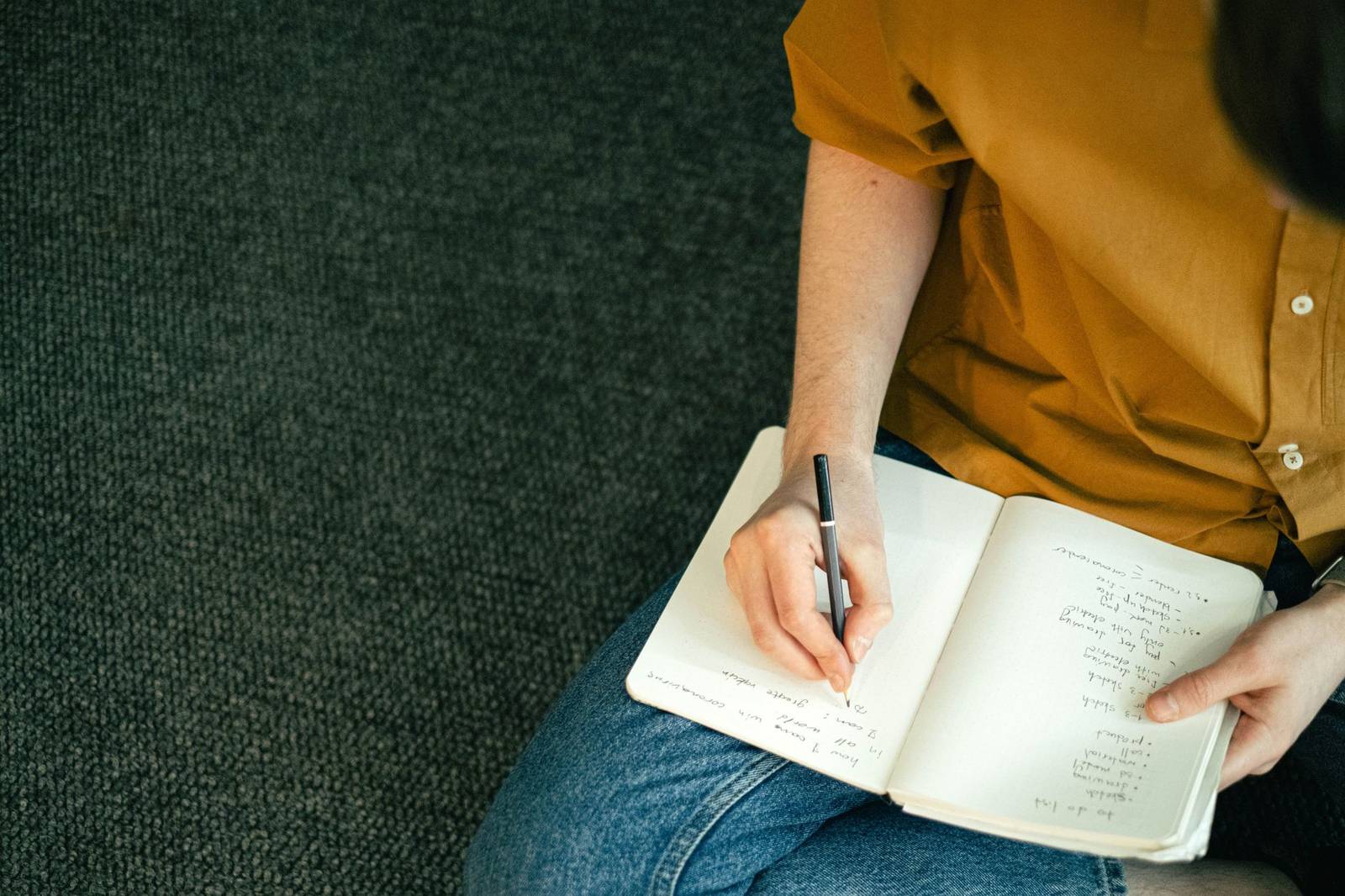
- The main part of the page holds your notes.
- The bottom of the page holds a summary.
- The lefthand margin holds cues that guide your review later.
If a fixed layout feels stiff, Nebel lists other ways to process material. You could make bulleted lists, write summaries in your own words or write questions about the material. Whatever you choose, link new points to things you already know.
Turn your notes into a review routine
Notes only pay off when you go back to them. Nebel’s advice is not to just reread or copy your notes but to reorganise them in some way, then test your memory and check what you are missing.
- Soon after class, fill gaps and add examples to any bare labels.
- Cover the main section and answer your cue questions from memory.
- Check your notes, and mark what you missed.
- Come back to the same ideas at different points in time.
The last step is spaced practice, which the Learning Scientists summary recommends alongside retrieval practice. Short, focused sessions suit it well, and the pomodoro technique for studying can give each session a clear start and finish.
Keep the limits in mind. The replication used entertaining talks, and the Learning Scientists caution that the findings may not necessarily generalise to an authentic classroom. Nebel also advises using AI tools selectively and not relying only on AI notes if you are trying to learn.
Frequently asked questions
Is handwriting always better than typing?
Show answer
No. A 2019 replication could not reproduce the original handwriting advantage, and the method made no difference on a test two days later. Another study found handwriters did better, so pick the tool that lets you stay selective.
Should I write down everything the teacher says?
Show answer
Usually not. Copying everything is recording, which Nebel says can be necessary if you won’t have a recording, text or slides. Otherwise, aim for complete ideas in your own words.
Do diagrams help in my notes?
Show answer
Copying diagrams in class did not improve learning in the Flanigan study. Nebel does list drawings and flow charts as ways to process material, so make your own to show how ideas connect.
Can I use AI tools to take my notes?
Show answer
Use them selectively. Nebel says they can help create detailed records but you shouldn’t rely only on AI notes if you are trying to learn.