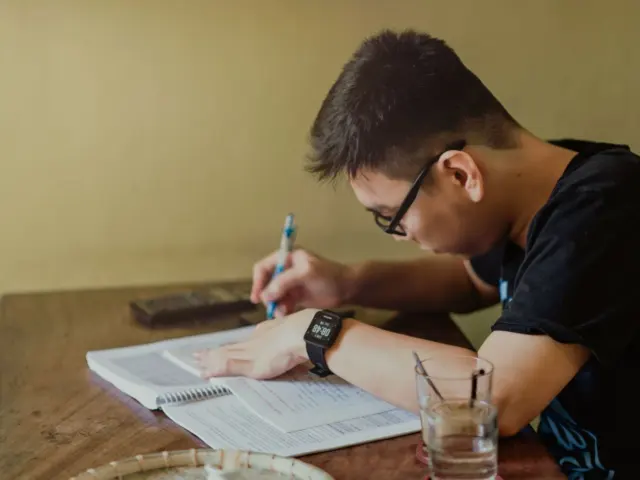

Worried a month is too little before your boards? Here is how to prepare for board exams in 30 days: map the syllabus, rank your weak topics, revise in daily blocks, and practise past papers against the clock.
This guide is part of the wider board exam preparation section, which is a good place to continue once your month is planned.
| Item | Value |
|---|---|
| Class 12 (HSSLC) first paper, 2026 routine | February 12 (English) |
| Class 10 (HSLC) first paper, 2026 routine | February 13 (Social Sciences) |
| Exam timing, 2026 routine | 9 am to 12 noon |
| Class 10 Science paper, 2026 routine | February 16 |
| Class 10 Mathematics A / B papers, 2026 routine | February 24 |
| Syllabus basis for the 2021 HSLC and HSSLC papers | Reduced syllabus, notified by the Board |
These figures come from a Free Press Journal report and a DIPR Nagaland notice. Dates and rules can change, so check the source and the board’s own notices before you rely on them.
What does the Nagaland timetable tell you about your month?
Before you plan a single study block, look at the exam routine for your class. As of the Free Press Journal report updated December 1, 2025, the 2026 routine for Class 10 ran Social Sciences on February 13, Science on February 16, English on February 18 and the second language on February 20.
Mathematics A and Mathematics B came on February 24, after the widest gap in the routine. That is a useful lesson: the paper that sits last among the core subjects gives you more room to revise, but only if it stays in your plan from the first day.
Class 12 started earlier, with English on February 12 in the same 2026 routine. Every paper ran from 9 am to 12 noon, apart from the vocational papers, which are listed for a shorter morning slot (February 26 from 9:00 AM to 11:00 AM for Class 10).
Treat these dates as a pattern, not as your own timetable. The same report notes that the sixth subject for Class 10 had no date provided, so always confirm your own subjects against the notification the board publishes for your exam year.
One more rule shapes your schedule. The report quotes the notification as saying the routine will not be altered for an unexpected holiday, and that any cancellation or postponement will be notified through the media. Build your plan to finish early rather than relying on extra days.
Start with the syllabus, not the textbook
The first job in any short revision window is to know exactly what you are being tested on. A DIPR Nagaland notice dated December 11 2020 shows why: for the 2021 HSLC and HSSLC examinations the question papers were set on a reduced syllabus notified by the Board, and the blueprint of the papers was published on the Board’s website.
The notice also said that a few subjects, such as Old Course Science for HSLC, were based on the full syllabus instead. The point for you is simple: the syllabus and blueprint can differ from year to year, so use the ones the board has published for your own exam.
Spend the first evening on this audit:
- List every chapter of every subject on one sheet of paper.
- Strike out anything the board’s syllabus for your year leaves out.
- Mark each remaining chapter as strong, shaky or untouched.
- Use the blueprint to note which chapters carry the most marks.
- Start your plan with the shaky chapters that carry the most marks.
This audit is the foundation of the month. Without it, you will spend hours re-reading chapters you already know well.
A week-by-week plan for the month
A month is short, so each stage needs one clear purpose. Use this order and adjust the details to your subjects:
- First week: audit and rebuild. Finish the syllabus audit, gather your notes, and rework the untouched and shaky chapters from the basics. Keep a running list of formulas, definitions, dates and diagrams.
- Second week: cover the full syllabus once. Move quickly through every subject, giving extra time to the weak chapters from your audit. Write short summary notes as you go.
- Third week: practise under exam conditions. Switch from reading to writing. Attempt full papers within the real time limit, then mark them honestly.
- Final stretch: polish and rest. Revisit your summary notes, fix the errors that keep repeating, and stop starting new topics. Sleep and food matter more now than another late night.
Keep one half-day each week as a buffer. If you fall behind, the buffer absorbs it, and if you do not, you can use it for your weakest subject.

How should you structure a study day?
Short, focused blocks work better than one long sitting. A simple daily pattern keeps every subject moving without exhausting you.
- Morning: start with your hardest subject while your mind is fresh.
- Midday: practise questions or past-paper sections for the subject you studied in the morning.
- Afternoon: take a lighter subject or a language paper, with a proper break and a meal.
- Evening: revise the day’s summary notes and fix mistakes from your practice.
- Before sleep: a short recall of formulas and key terms, then switch off the phone.
Rotate subjects across the week so that none is left for the end. Spacing out your revision helps you remember it, and it stops a single subject from taking over your timetable.
Plan your breaks as carefully as your study. A walk, a stretch or a few minutes away from the desk keeps your concentration steady through the day.
Use past papers and the maths chapters wisely
Working through nagaland board previous year question papers shows you how questions are phrased and where you lose time. Do this from the third week onward, and always write full answers rather than only reading them.
After each paper, sort your mistakes into three groups: concepts you did not know, steps you skipped, and silly errors. Each group needs a different fix, so this small habit makes your final revision much more efficient.
If you are in Class 10, the guide to class 10 maths important chapters can help you decide which topics deserve your best hours. Mathematics rewards daily practice, so keep a fixed slot for it even in weeks when other subjects feel more urgent.
Subject-by-subject revision tips
Each subject rewards a slightly different style of revision. These quick rules cover the main groups:
- Mathematics: solve problems daily, write every step, and keep an error log of the mistakes you repeat.
- Science: revise definitions, labelled diagrams and numerical methods, and practise explaining each process in your own words.
- Social Sciences and other theory subjects: build timelines, map practice and short lists of key terms, then test yourself without looking.
- English and language papers: practise writing formats, revise grammar rules and write at least one timed answer regularly.
Whatever the subject, active recall beats passive reading. Close the book, write what you remember, and then check.
The last days and exam morning
In the final days, your goal is calm accuracy. Review summary notes, redo a few marked-wrong questions, and leave new topics alone.
The Free Press Journal report says students must bring their Class 10 and 12 admit cards along with a valid ID proof on the day of the examination. It adds that students who fail to bring their hall ticket will not be allowed to enter the examination, so prepare your admit card the night before.
Use this short checklist for the evening before each paper:
- Place your admit card and ID proof in your bag.
- Pack pens, a geometry box or any other items your paper allows.
- Skim your summary notes for that subject, then stop studying.
- Sleep on time and plan to reach the centre with time to spare.
Frequently asked questions
Is a month enough to prepare for board exams?
Show answer
It can be enough to improve your results noticeably if you already studied during the year. A month works best for revision, practice and fixing weak topics, not for learning a whole syllabus from nothing.
Which subject should you start with?
Show answer
Start with the subject where you are weakest and which carries the most marks, but keep every subject in the weekly rotation. Check the date gaps in your own timetable so the papers that come first get revised first.
Can exam dates change after the timetable is released?
Show answer
The Free Press Journal report quotes the notification as saying the routine will not be altered for an unexpected holiday, but a cancellation or postponement will be notified through the media. Follow the board’s official announcements for your exam year.
Where can you find the syllabus and blueprint?
Show answer
A DIPR Nagaland notice dated December 11 2020 said the reduced syllabus and blueprint for the 2021 papers were made available on the Board’s website. Check the board’s official channels for the syllabus that applies to your own exam.
What should you carry on exam day?
Show answer
According to the Free Press Journal report on the 2026 routine, you need your admit card and a valid ID proof. Without the hall ticket, you will not be allowed to enter the examination.